In the automotive industry, the color temperature of automotive bulbs is very important to drivers and passengers, as it can affect driving comfort, safety, and visual appeal. With the rise of LED bulbs today, it is essential to know the color temperature of automotive bulbs. And We know that there are generally three types of bulbs, Halogen, HID, and LED. In fact, the relative color temperature specifications of bulbs of different materials are also different. First, let's explore the color temperature of the these three bulb types.

As we all know, the common types of general car bulbs are halogen lamps, HID, and LED lights. The following will describes the color temperature specifications of the three bulbs and briefly describes the impact of color temperature on our perception.


Besides, our eyes respond differently to different light colors. Light with a higher color temperature makes light feel brighter and clearer, improving our alertness and cognitive ability. However, higher color temperature bulbs may produce brighter light and cause more glare (when sunlight or strong lights hit the human eye, they produce strong reflections and flashes of light, causing the phenomenon of glare). This will make other drivers on the road at night feel uncomfortable, and it will be difficult to see the objects and scenes ahead clearly for a while, and may even lead to accidents. And while light with a lower color temperature can promote relaxation and sleepiness without the risk of causing glare, it may not be as bright and effective in illuminating the road ahead. This may also lead to unexpected situations ahead when the driver does not receive timely information and is not always alert, also risking an accident.

Therefore, people usually prefer to choose car bulbs with a color temperature between 4300K and 6000K for headlights, because this range strikes a balance between ensuring good visibility and reducing glare.
Considering the above factors, I recommend LED bulbs.
Firstly because of the wide range of color temperatures available for LED bulbs.

Secondly, compared with halogen lamps, LED bulbs have a more stable color temperature. Because the color temperature of the light bulb will be changed by the temperature of the filament caused by the voltage input, the voltage input cannot be guaranteed to be stable during driving, and the temperature around the light bulb will become higher or lower, so the color of the car light changes according to the temperature at which the bulb is operating. However, LED bulbs are less affected by this, because LED bulbs have stable performance and consume less power than halogen lamps under the same luminous efficiency. And the chip of the LED bulb is blue, and its color temperature is changed mainly by applying yellow pigment to change the luminous color.
Therefore, in the following analysis, this article will take LED bulbs as an example to describe the relevant elements of color temperature.
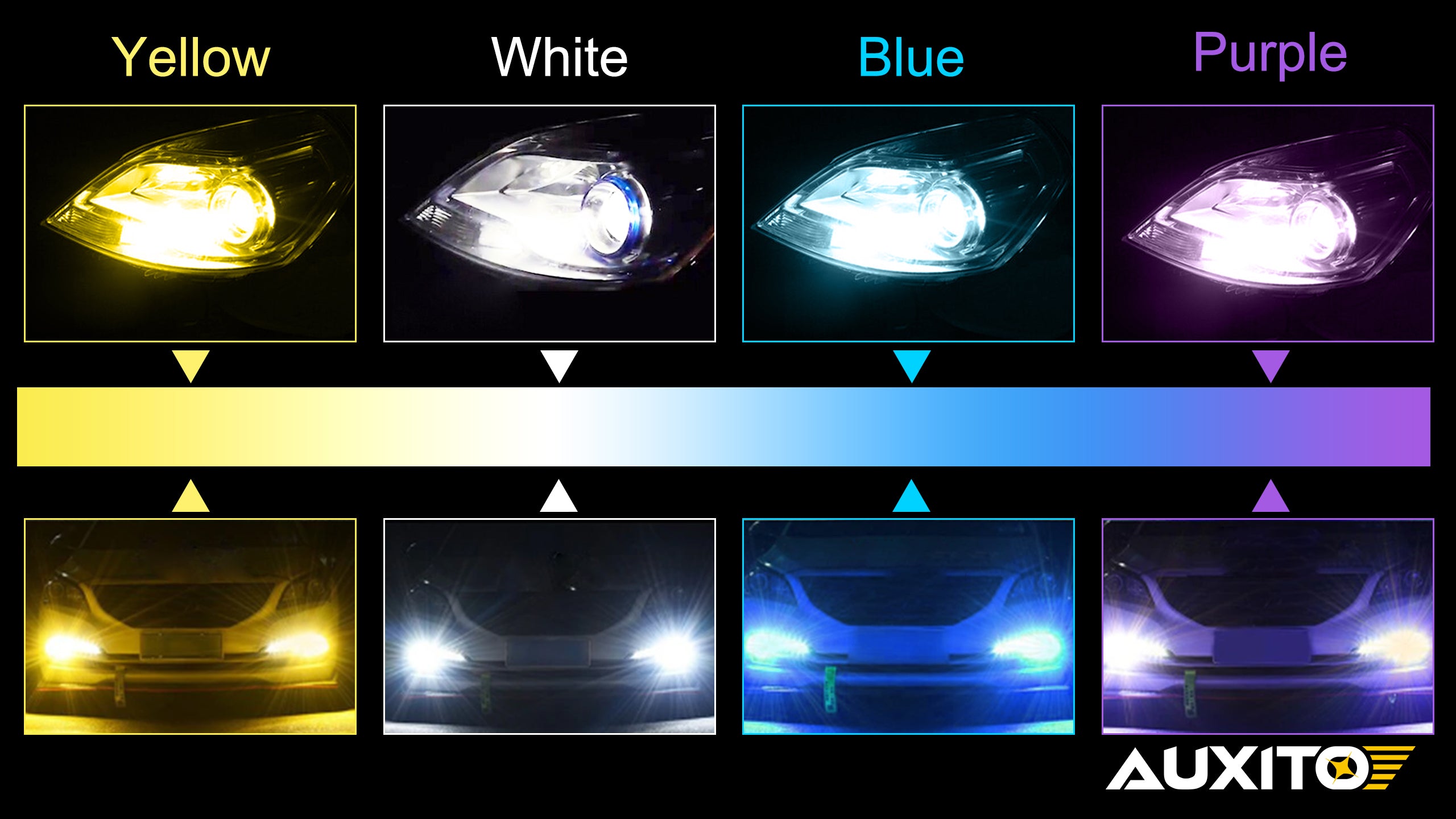
Bulb color temperature is a way to describe the color of a light source, and is a measure of how "warm" or "cold" the light is. A higher value represents a cooler light closer to blue, while a lower value represents a warmer light closer to yellow. In the automotive industry, the common color temperature of light bulbs is 3000K, 4000K, 5000K, 6000K and 6500K. These color temperatures represent different light colors, the specific color temperature corresponding to the relevant color can be seen in the chart below.

To better understand the LED bulb color temperature. After a brief explanation of what the color temperature of a light bulb is, we next look at what factors affect the color temperature of the bulb.
There are many factors that generally affect the color temperature of the bulb, depending on the circumstances. The following is a description of 5 common factors that affect.

After introducing the influence of the color temperature of the light bulb, I believe everyone is very clear about the importance of the color temperature of the car light bulb to us. Now let's talk about the correlated color temperature specifications of common headlight positions.
The color temperature of headlights is different for different locations. Below is a description of the color temperatures associated with common headlight positions.


Fog lights: fog lights are mainly used to increase the visibility of driving in bad weather, the common types of fog light bulbs are halogen and LED lights. Generally speaking, the color temperature of halogen lights is between 2700K and 3000K, while the color temperature of LED lights can reach more than 6000K.

All in all, the color temperature specifications of different car bulbs will vary depending on the type of bulb and its use. And the color temperature of car bulbs has an important impact on driving comfort, safety and visual effect. Therefore, when choosing car bulbs, we should choose according to our needs and budget. Also, we need to pay attention to the quality and legality of the bulbs to ensure safe driving.
Q: Is the color rendering index(CRI) related to the color temperature?
A: Color rendering index (CRI) is an indicator used to describe the color reproduction of objects by light sources. The color temperature is used to describe the color characteristics of the light emitted by the light source parameters, usually expressed in Kelvin (K). There is a certain relationship between these two indicators.
In general, a higher color rendering index means that the light source can better restore the color of the object, even at a similar color temperature to provide a more accurate color reproduction. Therefore, if you need to consider the case of object color reproduction, you can choose a light source with a higher color rendering index. However, it should be noted that the color rendering index and color temperature are not always proportional. For example, at the same color rendering index, a light source with a lower color temperature may provide more accurate color reproduction.
In short, although the color rendering index and color temperature are independent of each other, their influence needs to be taken into account when choosing the right light source.

Q: How to measure the color temperature of headlights?
A: Measuring the color temperature of a car headlight requires the use of an instrument called a spectroradiometer, which measures the wavelength and intensity of light and analyzes the color of the light to determine the color temperature of the light.
When measuring the color temperature of a car headlight, it is necessary to place the spectroradiometer in the center of the beam of the headlight, and then turn on the instrument. The instrument will record the measured spectral data, and calculate the color temperature value of the light source based on these data.

Q: How to choose LED light color temperature?
A:Here are four factors you need to consider when picking the color temperature of a light bulb.

Q: What color temperature is legal for headlights?
A: Color temperature regulations for automotive bulbs may vary from country to country. The specific legality needs to refer to the laws of your local state. The following are the color temperature regulation parameters of some countries, for reference only!
Therefore, it's important to note that these regulations can change over time and may differ depending on the type of vehicle or lighting system used. Additionally, some countries may have different regulations for different types of roads or driving conditions. It's always a good idea to check the local regulations in your area before installing new car bulbs.
Leave a comment